
Understanding Soil Types and Amendments for a Better Landscape
Whether you're planning a new lawn, refreshing landscape beds or preparing for a larger landscaping project, here's what Northeast Ohio homeowners should know about their soil.
Understanding the type of soil in your yard can help you make better decisions about planting, watering, drainage and overall landscape maintenance. When the existing soil isn't ideal, the right amendments can also improve its structure and create better growing conditions.
Common types of soil
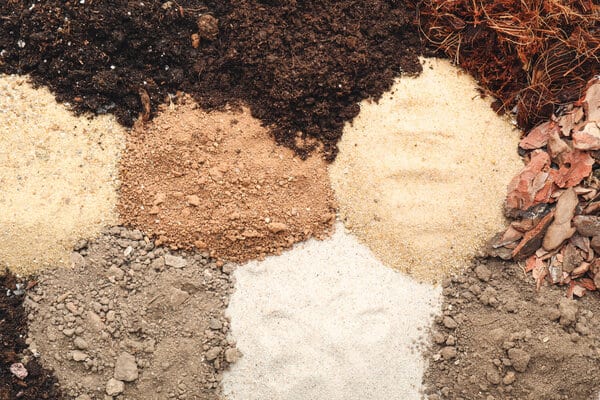
Most residential properties have soil made up of different proportions of clay, sand and silt. The balance between those materials determines how the soil behaves.
- Clay soil contains very fine particles and tends to hold water. It can become dense and compacted, making it difficult for roots to grow and water to drain properly.
- Sandy soil has larger particles and drains water quickly, but it may dry out quickly and lose nutrients faster than other soil types.
- Silty soil has smaller particles than sand and generally retains moisture while still providing better drainage than dense clay, but it can become compacted when frequently walked or driven over.
- Loamy soil contains a relatively balanced combination of sand, silt and clay. It retains moisture while still allowing excess water to drain.
Your property may also contain different soil conditions from one area to another, especially if previous construction or landscaping has changed the ground over time.
Pay attention to drainage
Your yard can give you clues about what's happening underneath. If water regularly pools after a storm, your grass stays soggy or certain areas turn muddy, compacted or clay-heavy soil may be preventing water from moving through the ground properly. Other areas may experience erosion or runoff instead.
These aren't just cosmetic concerns. Poor drainage can affect lawns, landscape beds, hardscaping and even areas around your home's foundation. Knowing how to identify common drainage issues can help you address the source of the problem instead of repeatedly repairing the symptoms.
What are soil amendments?
Soil amendments are materials added to existing soil to improve its physical properties or growing conditions. The appropriate amendment depends on what you're trying to accomplish.
Organic matter, such as compost, is one of the most commonly used amendments. It can improve soil structure while helping support healthy plant growth. This can be particularly useful when you're preparing your landscape for spring or getting beds ready for new plants.
Topsoil may also be brought in when establishing a lawn, filling low areas or creating a better planting layer. However, simply adding material isn't always enough. Proper grading and preparation are equally important to make sure the finished area moves water in the right direction.
Before making significant changes, consider having your soil tested. A soil test can provide information about pH and nutrient levels, helping you determine what your landscape actually needs instead of adding products unnecessarily.
Don't forget about mulch
Adding mulch around flowers, shrubs and trees can help soil retain moisture, moderate soil temperatures and suppress weeds. Organic mulch also gradually breaks down, contributing material back to the soil over time. When applying mulch, more isn't necessarily better. An even layer can provide the benefits you're looking for without piling material directly against plant stems or trunks.
Choosing the right ground cover depends on the area and your goals. Our guide to mulch vs. stone for landscaping explains the advantages of each and where they tend to work best.
Prepare the soil before installing a lawn
Good soil preparation is especially important when you're installing or restoring a lawn. Taking care of the foundation first gives your new lawn a better opportunity to thrive. Grass needs adequate contact with properly prepared soil to establish a healthy root system. Areas disturbed by construction or hardscaping may first need to be cleared, graded and prepared before seeds are planted.
If you're restoring an area after construction, our guide to choosing sod or seed after a patio or hardscape installation explains why proper soil preparation is an important part of either approach.
Build your landscape from the ground up
Knowing your soil type, recognizing drainage problems and making appropriate improvements can help you create healthier lawns and landscape beds while reducing problems down the road. You should also consider soil conditions before larger projects involving grading, patios, retaining walls or other landscape improvements.
DiPietro Landscaping has more than 20 years of experience helping homeowners throughout Northeast Ohio improve their outdoor spaces. From lawn installations and topsoil to grading, drainage and residential excavation, our team can help make sure your property has the right foundation for your next project.
Frequently asked questions
What is the first step in the process of soil preparation?
Recognizing your soil type. This will help you decide what you might change to improve it.
What is the most important characteristic of soil type?
Size and compactness of particles is very important because it determines how well the soil holds and drains water.
What kind of soil is most common throughout Northeast Ohio?
Clay soil. This is why drainage is such an important factor for your soil preparation.